NFC
Very short-range wireless that works with a tap: contactless cards, phones, transit.
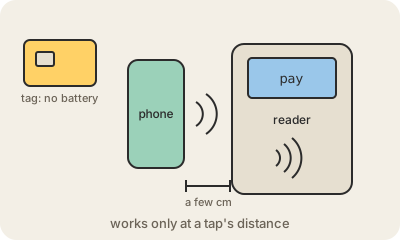
NFC (near-field communication) is a wireless technology that only works over a few centimeters, roughly the distance of a tap. It is what happens when you pay by holding a card or a phone against a terminal, go through a subway gate with a transit card, or open a door with a badge. Two devices come close, exchange a small amount of data, and that is it.
One side can be a tag with no battery at all: a tiny chip and an antenna inside a card, a sticker or a key fob. The reader's own radio field powers the tag for an instant, just long enough for it to answer. Phones can act as a reader, as a tag, or both, which lets them pay, read a label on a museum display or start pairing with headphones just by touching them.
The very short range is a feature, not a limitation. Because you have to bring the device almost into contact, it is hard to trigger a payment by accident, and someone across the room cannot easily listen in. Cards and phone wallets add their own protections on top: phones usually ask you to unlock them or confirm with your face or fingerprint, and each payment uses a one-time code instead of your real card number. NFC is slow and carries little data, so it is used to start things, not to move files.
Keep in mind
- Works only within a few centimeters, about the distance of a tap.
- Tags in cards and stickers need no battery; the reader powers them.
- Used for contactless payments, transit cards, badges and quick pairing.
- The tiny range makes accidental or remote triggering hard.