Netflix
A streaming service, and the engineering it built to deliver video to the whole world.
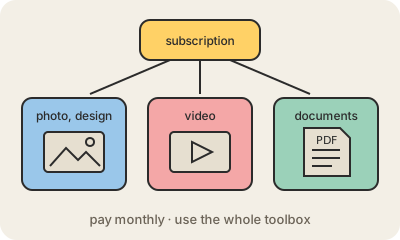
Netflix was founded in 1997 in California by Reed Hastings and Marc Randolph, renting DVDs by mail. In 2007 it started streaming video over the internet, and later began producing its own series and films. It makes money mainly from monthly subscriptions, and also from cheaper plans that show ads. To the viewer it is an app; behind the app is some of the best-known engineering on the internet.
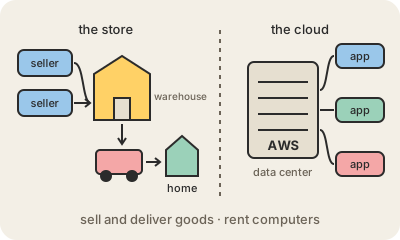
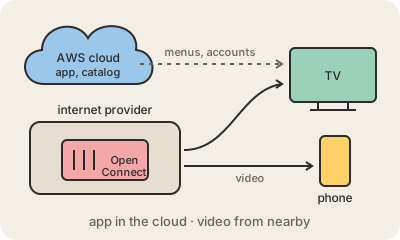
After a database failure stopped DVD shipments for days in 2008, Netflix moved its systems from its own data centers to AWS, finishing in 2016. It was one of the first big companies to bet everything on the cloud, splitting its software into many small services that can fail without taking down the whole site. To make sure they really could, its engineers wrote Chaos Monkey, a tool that switches off servers at random during work hours. That practice of breaking things on purpose to find weaknesses is now called chaos engineering.
The video itself does not come from the cloud. Netflix built its own CDN, Open Connect: servers full of films that it gives to internet providers to install inside their networks, close to viewers, so a popular episode travels a short distance. Each title is also encoded in many qualities, and the app switches between them as your connection speeds up or slows down. Netflix has published much of this work as open source, and its recommendation system, which decides the rows you see on the home screen, is a classic example of machine learning in a product.
Keep in mind
- Started in 1997 renting DVDs by mail; streaming since 2007; earns mostly from subscriptions.
- An early large company to move everything to the cloud, running on AWS.
- Popularized chaos engineering with Chaos Monkey.
- Its own CDN, Open Connect, places video servers inside internet providers.