FinOps
Understanding and controlling cloud spending, as a job shared by engineers and finance.
FinOps (from finance and operations) is the practice of managing cloud costs as a shared responsibility. In a traditional data center, buying servers was a big, slow decision approved by finance. In the cloud, any engineer can start resources in seconds and the bill arrives at the end of the month, already spent. FinOps brings engineering, finance and business teams together so that spending decisions are made with the numbers in view.
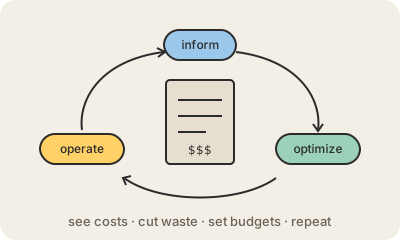
The FinOps Foundation, part of the Linux Foundation, describes it as a loop of three phases. Inform: make costs visible and assign them to teams and products, usually by tagging every resource with its owner. Optimize: cut waste, like idle servers left running, oversized machines (rightsizing), forgotten disks and snapshots, and commit to steady usage with discounts such as reserved instances or savings plans. Operate: set budgets and alerts, review costs regularly and make cost one more thing teams track, next to speed and reliability.
The goal is not to spend as little as possible but to get the most value per dollar: spending more on a product that grows can be the right call. Clouds provide tools for it, such as AWS Cost Explorer and Budgets, Azure Cost Management and Google Cloud billing reports. The most common surprises are data leaving the cloud, logs and storage that grow quietly, and test environments nobody turned off.
Keep in mind
- Makes cloud spending a shared responsibility of engineering, finance and business.
- Three phases: inform (visibility), optimize (cut waste), operate (budgets and habits).
- Common levers: tagging, rightsizing, turning off idle resources, commitment discounts.
- Aims for value per dollar, not the lowest possible bill.