Roaming
Using another carrier's mobile network, usually abroad, with your own number.
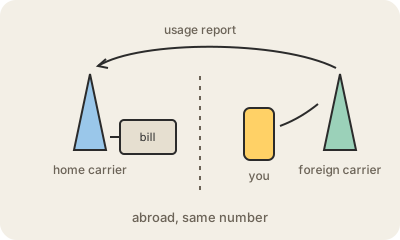
Roaming is when your phone connects to a mobile network that is not your carrier's, usually because you are in another country. You land, turn on the phone, and it joins a local network as if it were a local customer. You keep your number, and calls, texts and data still work.
It works because carriers sign agreements with each other. The foreign network recognizes your SIM, checks with your home carrier that you are allowed to use it, carries your traffic, and later bills your carrier for it. Your carrier then charges you, often at its own roaming rates. That middle step is why roaming has a reputation for surprise bills, especially for mobile data.
Things have improved. In the European Union, "roam like at home" rules have let people use their plan in other EU countries at no extra cost since 2017. Elsewhere, many carriers sell daily or weekly travel packs. And with an eSIM it is easy to add a local data plan for the trip and leave roaming off. Phones have a "data roaming" switch: if you are not sure what your plan includes, turning it off before you travel avoids nasty surprises.
Keep in mind
- Your phone uses a partner network when your carrier has no coverage, usually abroad.
- You keep your number; the foreign carrier bills your carrier, which bills you.
- In the EU, roaming between member countries costs no extra since 2017.
- Check your plan or switch off data roaming before traveling.