Platform engineering
Building an internal product that lets developers ship without becoming cloud experts.
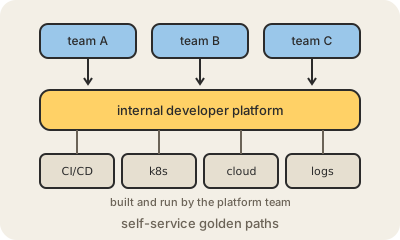
Modern software runs on a long stack of tools: cloud accounts, Kubernetes, CI/CD pipelines, infrastructure as code, secrets, monitoring, security scanners. The DevOps idea of "you build it, you run it" put much of that on every product team, and many ended up spending more time wiring tools than building features. Platform engineering answers that by having a dedicated platform team build a shared, self-service layer on top of all that complexity.
That layer is called an internal developer platform. Through a portal, a command line or a few config files, a developer can create a new service from a template, get a repository with its pipeline already set up, request a database, deploy to staging and see logs and dashboards, all without filing tickets or learning every tool underneath. The recommended routes are called golden paths: the easy, supported way to do common tasks, with security and cost rules already built in. Backstage, an open-source portal created at Spotify, is a popular starting point.
The key mindset is treating the platform as a product and developers as its customers: interview them, measure whether they adopt it, and make the golden path the easiest path rather than a mandate. Done badly, a platform becomes one more bureaucratic gate, or a pile of tools nobody asked for. Done well, it lets a company with dozens of teams move fast while keeping its infrastructure consistent and secure.
Keep in mind
- A platform team builds self-service tools for the other development teams.
- The internal developer platform hides infrastructure details behind templates and a portal.
- Golden paths make the recommended way also the easiest way.
- It works when run as a product, with developers as its customers.