Huawei
A Chinese company that makes mobile network equipment, phones and its own chips.
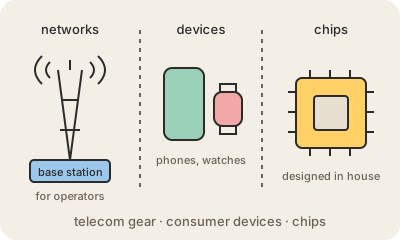
Huawei was founded in 1987 in Shenzhen, China, by Ren Zhengfei. It started by reselling telephone switches and grew into one of the world's largest makers of telecom equipment: the antennas, base stations, fiber gear and core systems that mobile operators install so your phone can connect. When a carrier builds a 4G or 5G network, Huawei is one of a handful of companies, along with Ericsson and Nokia, that can supply the whole thing.
It is also known for its consumer devices: smartphones, tablets, laptops, watches and earbuds. Its chip design unit, HiSilicon, designs processors such as the Kirin chips in its phones. Huawei also sells cloud services and equipment for companies, and its shares are not traded on any stock market: it is a private company that says it is owned by its employees.
Huawei has been at the center of a long dispute between the United States and China. Several governments, citing national security concerns that Huawei rejects, have limited or banned its equipment in their 5G networks. Since 2019, US export restrictions cut Huawei off from American technology, including Google's apps on its new Android phones and chips made with US tools. In response it built its own operating system, HarmonyOS, and works with Chinese factories to make its chips.
Keep in mind
- Founded in 1987 in Shenzhen by Ren Zhengfei; privately held.
- One of the main suppliers of 4G and 5G network equipment, with Ericsson and Nokia.
- Makes phones and other devices, and designs chips through HiSilicon.
- US export restrictions since 2019 led it to build HarmonyOS and rely on Chinese suppliers.