GitLab
A platform for hosting code, reviewing it and shipping it, often self-hosted.
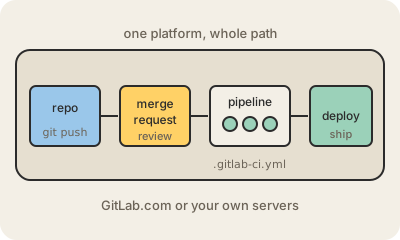
GitLab is a platform where software teams keep their Git repositories and do everything around them: plan work in issues, propose changes through merge requests (what GitHub calls pull requests), review code, and run CI/CD pipelines that test and deploy it. It started in 2011 as an open source project by Ukrainian developer Dmytro Zaporozhets and became a company, GitLab Inc., a few years later.
Its pitch is a single application for the whole software lifecycle. GitLab CI/CD is built in: you add a .gitlab-ci.yml file to the repository describing the steps, and runners execute them on every push. On top of that it adds security scanning, a container registry, package hosting and project management.
The other big difference with GitHub is where it runs. You can use the hosted service at GitLab.com, but many banks, governments and large companies install GitLab on their own servers so their code never leaves their network. It follows an open core model: the Community Edition is open source, and paid tiers add enterprise features. The company is known for being fully remote and for publishing its internal handbook online.
Keep in mind
- Hosts Git repositories with issues, merge requests and code review.
- CI/CD is built in, configured with a
.gitlab-ci.ymlfile. - Can be used as a service or installed on your own servers.
- Open core: a free open source edition plus paid tiers.