GitHub
A website where teams store their code with Git and work on it together.
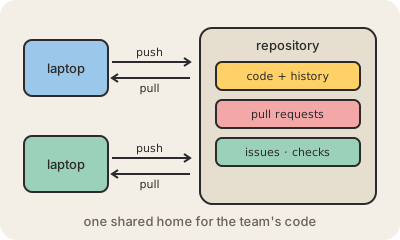
GitHub is an online service for hosting code. Each project lives in a repository: a folder of files plus its full history, tracked with Git. Developers keep a copy on their laptop, make changes, and push them to GitHub so the rest of the team can pull them. It started in 2008 and has been owned by Microsoft since 2018.
Git is the tool; GitHub is a place built around it. On top of storing code, it adds what a team needs to collaborate: pull requests to propose a change and discuss it before it is merged, issues to track bugs and ideas, GitHub Actions to run tests and deployments automatically, and pages to document the project.
It matters because it became the default meeting point for software. Most well-known open source projects live there, companies use private repositories for their own code, and a developer's public GitHub profile often works as a portfolio. Alternatives like GitLab and Bitbucket do similar things, and since everything is plain Git, a project can move between them.
Keep in mind
- Git tracks changes; GitHub hosts Git repositories online and adds collaboration tools.
- A pull request is a proposed change that others review before it joins the main code.
- Repositories can be public, open to anyone, or private to a team.
- Owned by Microsoft since 2018; GitLab and Bitbucket are common alternatives.