Doxxing
Digging up and publishing someone's private details, like home address, to target them.
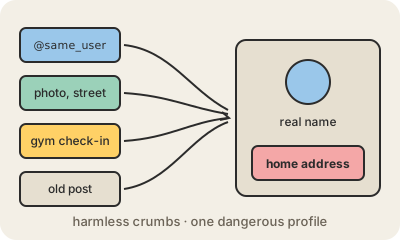
Doxxing is collecting private information about a person, such as their real name, home address, phone number, workplace or family members, and publishing it online without their consent, usually to scare, shame or harass them. The word comes from "docs", as in dropping someone's documents, and started in hacker circles in the 1990s.
Most of the time no hacking is involved. The information is assembled from crumbs that were each harmless on their own: a username reused on several sites, a photo whose background shows a street, a running app that maps the same route every morning, a public property record, an old post mentioning the kid's school. Data brokers that sell people's contact details make it even easier. Sometimes it is fed by a data breach.
The harm is real: online anger turns into people showing up at a door, calling an employer, or worse. In some places doxxing is a crime of its own; in others it falls under harassment or stalking laws. To make it harder: avoid reusing the same username for your public and private life, check what your photos and fitness apps reveal, keep your address off public profiles, and ask data broker sites to remove your listing where the law lets you.
Keep in mind
- Publishing someone's private details without consent, usually to harass them.
- Usually built from many small public crumbs, not a hack.
- Reused usernames, photo backgrounds and fitness apps are common leaks.
- A crime in some places, and covered by harassment laws in many others.