Text-to-speech
Technology that reads written text aloud in a synthetic voice.
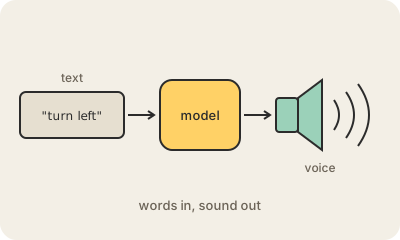
Text-to-speech, or TTS, turns written text into spoken audio. It is the voice of your GPS, the screen reader that lets blind people use a phone, the narrator of some audiobooks and the reply of a voice assistant.
Early systems either sounded robotic or glued together tiny recorded snippets of a real person, which gave that choppy, slightly off rhythm. Today's systems are neural networks trained on many hours of recorded speech, and they can sound remarkably natural: pauses, intonation, even a smile in the voice. Developers can tune pronunciation and pacing with a markup language called SSML. On AWS, the service is Amazon Polly.
The same progress has a darker side. Some modern models can imitate a specific person's voice from a short recording, which is useful for someone who is losing their ability to speak, and dangerous in the hands of scammers who fake a relative's voice on the phone. That is why voice cloning features usually require consent from the owner of the voice.
Keep in mind
- Converts written text into spoken audio.
- Powers screen readers, navigation apps and voice assistants.
- Neural TTS sounds far more natural than older systems.
- Voice cloning makes consent and fraud real concerns.