Sentiment analysis
Software that reads text and tells whether the writer sounds happy, angry or neutral.
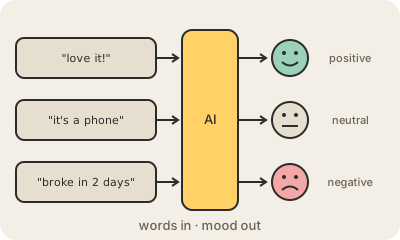
Sentiment analysis is the use of software to read a piece of text and judge the feeling behind it: positive, negative or neutral, often with a score for how strong it is. "Arrived fast and works great" is positive; "broke after two days" is negative; "it's a phone" is neutral.
Companies use it because there is far too much text to read by hand. A brand can scan thousands of product reviews, social media posts or support chats each day and spot that complaints about delivery jumped this week. A call center can flag the conversations where a customer is getting angry. Finer versions look at sentiment per topic: the same review can love the camera and hate the battery.
Early systems counted happy and sad words, which failed on things like "not bad at all". Modern ones use machine learning, and today large language models read context much better. Sarcasm, irony, slang and mixed feelings are still hard, so results are best read as trends over many texts, not as a verdict on a single message.
Keep in mind
- Labels text as positive, negative or neutral, often with a score.
- Used on reviews, social media, surveys and customer support.
- Sarcasm and mixed opinions are still easy to get wrong.
- Most useful for spotting trends across many messages.