Intel
The American company behind most PC and server processors for decades.
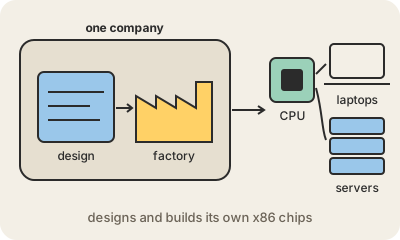
Intel makes CPUs, the main processor of a computer. Its chips, sold under names like Core for PCs and Xeon for servers, have powered most of the world's desktops, laptops and data centers since the 1990s. It created x86, the instruction set that Windows PCs and most servers still use, and in 1971 it sold one of the first microprocessors.
What sets it apart is that it both designs and manufactures its chips, in its own factories (fabs) in the United States, Ireland and Israel, among other places. Most rivals only design: AMD, Apple and NVIDIA send their designs to TSMC. Owning the factories was Intel's great advantage for decades; when it fell behind on the most advanced manufacturing processes in the late 2010s, that advantage turned into a burden.
Today Intel is trying to win back its lead and to become a foundry too, making chips designed by other companies the way TSMC does, with backing from the US government, which wants advanced chipmaking on its own soil. Meanwhile it faces competition on several fronts: AMD in PCs and servers, ARM-based chips in laptops and the cloud, and NVIDIA in AI hardware.
Keep in mind
- Created the x86 architecture used by Windows PCs and most servers.
- Designs and manufactures its own chips, unlike most competitors.
- Fell behind TSMC in manufacturing and is now also offering to make chips for others.
- Competes with AMD in CPUs, with ARM-based chips and with NVIDIA in AI.