AWS Lambda
Run a piece of code only when something happens, with no server to manage.
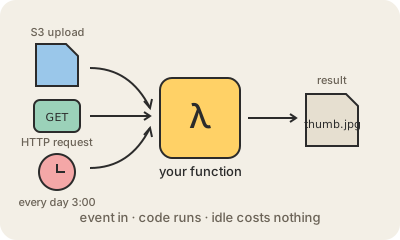
Lambda lets you upload a function (a chunk of code in Python, JavaScript, Java and other languages) and tell AWS when to run it: when a file lands in Amazon S3, when an HTTP request arrives through Amazon API Gateway, when a message shows up in an Amazon SQS queue, or every day at 3 a.m. AWS finds a machine, runs your code, and throws the machine away. You never see a server.
You pay per request and per millisecond of execution. If nobody calls the function, the bill is zero. If a million people call it at once, AWS runs thousands of copies in parallel without you changing anything. The limits: one run lasts at most 15 minutes, and the first call after a quiet period is a bit slower (a cold start) while AWS prepares a fresh copy.
This is what people mean by serverless: there are still servers, but someone else owns them. A typical example: a photo app uploads an image to S3, which triggers a Lambda function that makes a thumbnail and stores it back. No machine sits idle waiting for the next photo.
Keep in mind
- A function runs in response to an event: an upload, a request, a schedule.
- Billing is per request and per millisecond; idle time costs nothing.
- One execution lasts up to 15 minutes; longer jobs belong somewhere else.
- Scales on its own, from zero to thousands of parallel copies.