Beta version
An almost-finished version of software, released early so real users can find problems.
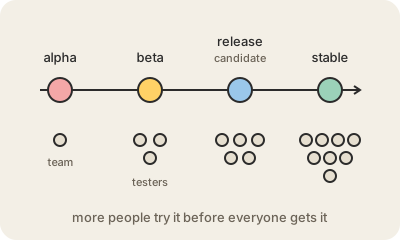
Before a program is officially launched it goes through stages. The alpha version is rough and tested mostly inside the company. The beta is mostly feature-complete but not yet polished: it is handed to a wider group of real users, the beta testers, precisely so they hit the bugs the team did not find. Just before launch there may be a release candidate, a version that will become final unless something serious appears. The final one is called stable.
A beta can be closed, with invited testers only, or a public beta that anyone can join. Apple, Google and Microsoft all publish betas of their next operating systems months ahead, and apps often have a beta channel you can sign up for. In return for early access, testers accept crashes, odd behavior and lost data now and then, and are asked to report what goes wrong.
The label also became a way to manage expectations. Calling something beta tells users it may change or break, and gives the company room to adjust it based on how people actually use it. Some products, famously Gmail in its first years, kept the beta label for a long time even while millions relied on them. If you depend on a device for work, it is usually wise not to install a beta on it.
Keep in mind
- Alpha is rough and internal; beta is almost complete and shared with real users.
- Beta testers get early access in exchange for bugs and feedback.
- A release candidate is the version that ships unless something serious appears.
- Avoid betas on devices you need to work reliably.