Metaverse
The idea of shared 3D virtual worlds where people meet, play and work as avatars.
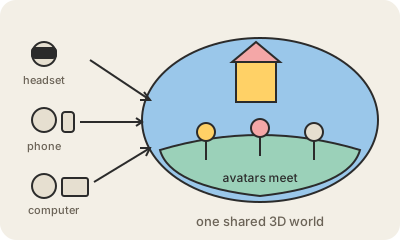
The word metaverse comes from Snow Crash, a 1992 science fiction novel by Neal Stephenson, where people put on goggles and enter a virtual city as avatars. Today it names a broad idea: online 3D spaces that are always on, where many people are present at the same time, can talk, play, buy things and build, and maybe carry their identity and belongings from one world to another.
The term became a buzzword in 2021, when Facebook renamed itself Meta and said building the metaverse was its next big goal. Other companies followed with announcements, and for a while almost any 3D or virtual reality product was called a metaverse. Interest cooled in the following years, as attention moved to generative AI.
What actually exists is a set of separate pieces. Online games and platforms such as Roblox, Minecraft, Fortnite and VRChat already host huge shared worlds and concerts. Virtual reality headsets like Meta Quest and mixed reality devices like Apple Vision Pro let you feel inside a 3D space, and some companies use them for training or meetings. What does not exist is a single, connected metaverse: each world has its own accounts, rules and owner, and you cannot walk from one to another as you can between websites.
Keep in mind
- The word comes from Neal Stephenson's 1992 novel Snow Crash.
- It means shared, always-on 3D worlds where people meet as avatars.
- Became a buzzword in 2021, when Facebook renamed itself Meta.
- Today there are many separate virtual worlds, not one connected metaverse.