HDMI
The standard cable and plug that carries picture and sound to a TV or monitor.
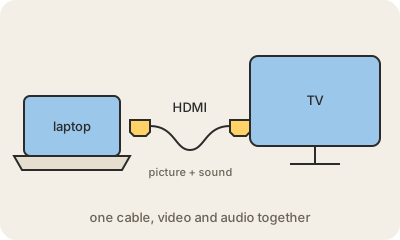
HDMI (High-Definition Multimedia Interface) is the plug on the back of almost every TV, and on game consoles, streaming sticks, cable boxes, projectors and many laptops. One cable carries the digital picture and the sound together, which replaced the bundle of colored analog cables that TVs used before. It appeared in the early 2000s and became the default for anything that plugs into a screen.
HDMI has gone through several versions, and each one carries more data. More data means higher resolution and higher refresh rate: older versions top out at 4K at 30 or 60 frames per second, while HDMI 2.1 can carry 4K at 120 Hz or even 8K, which matters for new consoles and gaming monitors. Both the devices and the cable have to support the faster version to get it; the plug looks the same.
It also does a few useful things behind the scenes. It can let the TV remote control the soundbar or the console, and it can send the TV's audio back to a soundbar through the same cable. It also carries a copy protection system, called HDCP, which is why some streaming apps refuse to play through certain adapters. Computers increasingly use USB-C or DisplayPort instead, but HDMI remains the plug of the living room.
Keep in mind
- One cable for digital video and audio together.
- Newer versions carry more data: higher resolution and refresh rate.
- Both devices and the cable must support a version to get its features.
- HDCP copy protection can block playback through some adapters.