CMS
Software that lets people publish and edit a website's content without writing code.
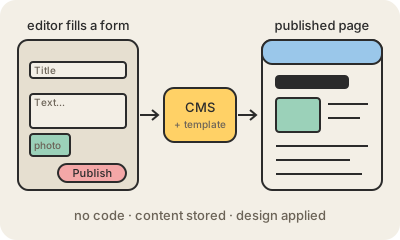
A CMS (content management system) is software for creating, editing and publishing the content of a website through forms, without touching HTML. An editor logs in, writes a title, pastes some text, uploads a photo and clicks "Publish"; the CMS stores it in a database and fills in the site's design template to produce the finished page.
The point is a clean split of jobs. Developers and designers build the templates and features once; writers, marketers and shop owners then add pages, news and products every day on their own. A CMS usually adds users and roles (who can write, who can approve), drafts, scheduled posts and a history of changes.
WordPress is the best-known example, open source and used by a very large share of the web; Drupal and Joomla are other long-standing ones, and services like Wix or Squarespace bundle a CMS with hosting. A newer style, the headless CMS, only stores and serves the content through an API, and leaves the look to separate apps, so the same article can appear on a website, a phone app and a smart screen.
Keep in mind
- Lets non-programmers create and edit web content through forms.
- Separates content (stored in a database) from design (templates).
- Adds roles, drafts, scheduling and change history.
- A headless CMS serves content through an API to any app or site.