Uber
An app that matches people who need a ride, or a meal, with nearby drivers.
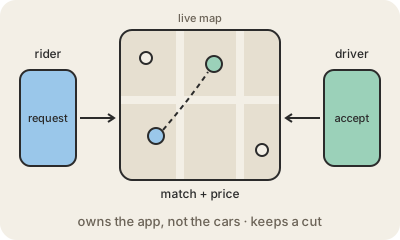
Uber was founded in San Francisco in 2009 by Garrett Camp and Travis Kalanick. It owns almost no cars. What it runs is a marketplace: an app where riders ask for a trip and independent drivers, using their own vehicles, accept it. Uber sets the price, handles the payment and keeps a share of each fare.
The hard part is software working in real time. Every few seconds, drivers' phones send their GPS position; when you request a ride, the system looks for the nearest available drivers, estimates arrival times and routes, and makes the match. When demand is higher than the drivers available, as on a rainy Friday night, prices go up automatically. That surge pricing is meant to bring more drivers onto the road and make some riders wait.
The same machinery moves other things: Uber Eats delivers food from restaurants, and Uber also does package delivery and freight. The model has been controversial: taxi drivers have protested in many cities, some places banned or restricted it, and courts in several countries have debated whether its drivers are independent contractors or employees who deserve labor protections. The company went public in 2019.
Keep in mind
- Founded in San Francisco in 2009; it connects riders and independent drivers.
- Matching, routing and pricing happen in real time from phones' GPS positions.
- Prices rise when demand outruns the drivers available (surge pricing).
- Uber Eats uses the same system for food delivery.