Data structure
A way of organizing data in memory so the operations you need are fast.
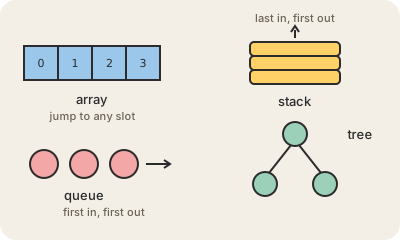
A data structure is a particular way of arranging data inside a program so it can be used efficiently. The same list of customers can be kept as a simple numbered row, sorted, grouped by city or linked in a chain, and each arrangement makes some operations fast and others slow. Choosing the right one is half of writing a good algorithm.
A few classics show up everywhere. An array is a row of numbered slots: jumping to slot 500 is instant, but inserting in the middle means shifting everything after it. A hash table (called a dictionary or map in many languages) finds a value by its key almost instantly, like looking up a phone number by name. A stack works like a pile of plates, last in first out, and is how programs remember which function called which. A queue is first in first out, like a line at the bank, and is used for jobs waiting their turn. Trees and graphs connect items to each other, for folders inside folders, database indexes or a map of roads.
You rarely build these from scratch: every modern language ships with good versions of them. What matters is knowing which to pick. Searching for a name in an unsorted list of a million entries means checking them one by one; putting the same names in a hash table makes each lookup take about the same time no matter how big it grows.
Keep in mind
- The arrangement decides which operations are fast and which are slow.
- Classics: array, hash table, stack, queue, tree, graph.
- Languages include ready-made versions; the skill is choosing well.
- Hash tables give near-instant lookup by key, even with huge amounts of data.